
If a high-volume CNC machining quote comes in above your target, we’re happy to help you understand the factors behind the price. In most cases, certain design decisions may increase costs through added machining time or tooling requirements. At high production volumes, even modest increases in the cost per part can add up quickly.
At Polyhistor International, we help customers understand these cost drivers and identify design changes that can produce significant savings.
An Example of Cost Drivers: Tight Tolerances Affect the Entire Process
Demanding tolerances are a central part of precision machining, and when critical features require them, we’re always ready to manufacture tight-tolerance parts. However, tight tolerances can be a major cost driver, so we always encourage partners to consider where tolerances could be relaxed.
Tighter tolerances increase costs in a variety of ways. These tolerances leave less room for variation, so that often requires slower machining speeds or additional setups. It can also increase the chances that a part will need to be reworked or scrapped. Each requirement adds time or expense, which is reflected in the price per part.
We often confirm that each tolerance is important to the intent of your design. If a noncritical feature can accept a wider tolerance without affecting performance, that change can lower the overall cost of the program.
How Non-Standard Feature Sizes Can Increase Costs
Including non-standard tool, hole, and thread sizes can be another driver for price per part. Non-standard features may not be a challenge to machine, but they often create other requirements that increase costs.
For instance, a non-standard feature may require custom cutting tools, which themselves are more expensive than standard tools and will add lead time to a project. But a single custom tool is not usually sufficient for a high-volume project; backup tooling will be necessary. Otherwise, a project may come to a halt if a tool breaks. Because custom tools can have long lead times, a broken custom tool could bring production to a costly standstill while a replacement is manufactured.
The effects go beyond machining. For proper quality control and inspection, non-standard threads or other features may require new gauges or custom inspection fixtures; purchasing this equipment and creating new inspection processes can add cost and lead time. And if there is assembly involved, non-standard feature sizes can require special assembly tooling or hardware.
Small Inefficiencies Become Major Costs at High Volumes
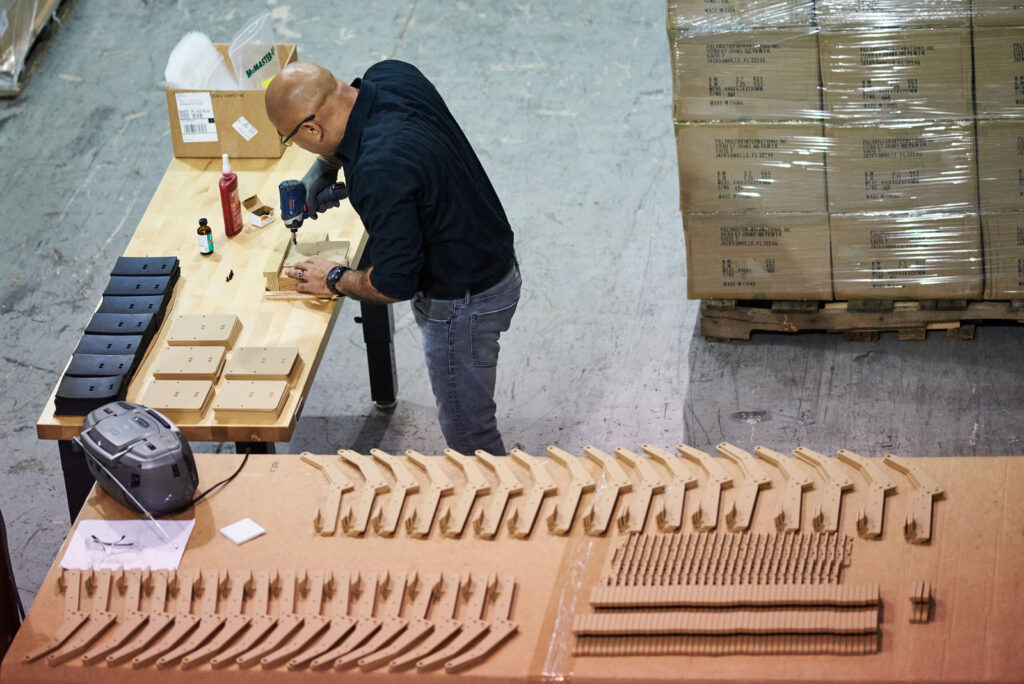
At low volumes, these design choices may increase the price per part, but the total purchase price may be low enough that the increase is tolerable. At high volumes, that same inefficiency will be repeated hundreds or thousands of times. Even a small cost added to each component can become a significant expense at high volumes.
That is why price-per-part improvements are so important in high-volume CNC machining.
Design for Future Production Volumes
In our product development services, we’ll consider production-scale manufacturability even if you’re only starting with a few prototypes. It’s easier to optimize a design’s features early than to revise a design after it has entered production.
Still, it’s sometimes worth considering a redesign for a part that’s already in production. Redesigns may require an upfront investment, but they can pay for themselves very quickly if they remove tooling expenses or cycle time on every part.
We can help you compare the redesign cost with the potential savings on production to make the right choice.
Consult With High-Volume Machining Experts
If you’re developing a design for high-volume production, we can help you find ways to improve your cost efficiency. Request a quote or contact our Jacksonville machine shop to discuss your design!