
If you don’t work in manufacturing every day, it might be easy to assume “machining is machining.” If the end result is always the same part, it might seem like the “right” way to cut it would be the same whether you need one piece or ten thousand.
In reality, the approach changes according to the stage of your project. Prototype work and production runs come with different priorities in lead times, cost, and more. At Polyhistor International, we adjust our decisions accordingly in areas like programming, tooling, fixturing, and setup strategy.
CNC Prototyping Services: Machining for Iteration
Prototyping is often low quantity, but volume alone doesn’t define prototyping. The defining goal is to learn about your product: validating fit and function, confirming performance, and iterating based on results.
When you expect design changes, a manufacturer’s objectives adjust. Speed is critical in prototyping, but in a different way from production. It usually doesn’t make sense to spend extra time creating a perfectly optimized program. If the next revision changes the part, that work can become obsolete. As a result, time saved in machining is outweighed by the added programming time.
Our machining strategy in rapid prototyping services emphasizes speed and flexibility, which often means:
- Fast, flexible programming over highly tuned optimization
- Standard tooling and workholding to keep costs and lead times down
- Multiple setups as necessary to avoid custom fixturing
The approach is meant to support rapid feedback loops. We want to make the part cost-efficiently and help you move to the next iteration sooner.
High-Volume Production Machining: Repeatability and Low Per-Unit Cost
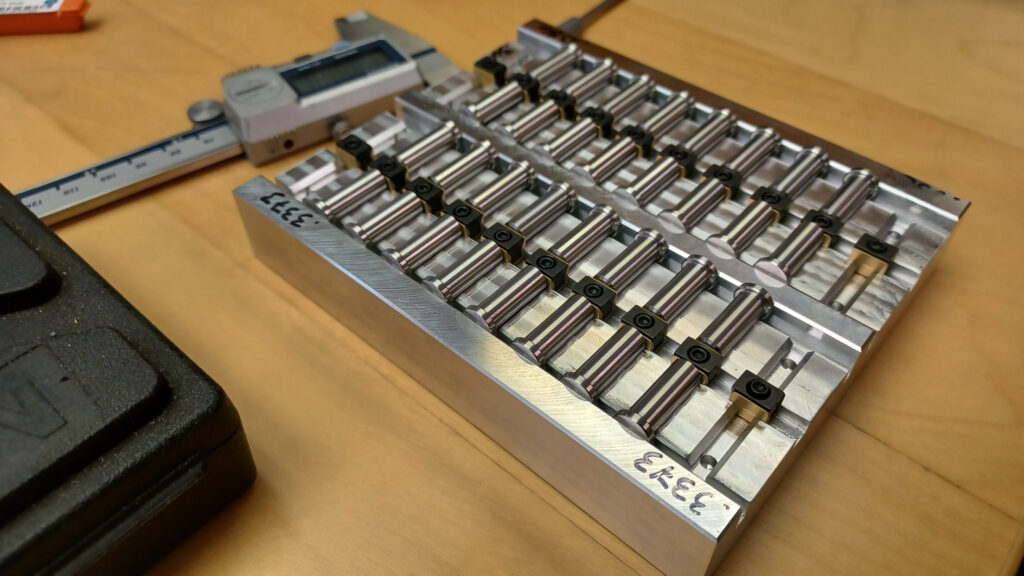
Production machining is characterized by a stable design and repeat volume. Once we know the program won’t be changing frequently, it becomes cost-efficient to invest in process optimization to improve your throughput and capacity.
In production, our Jacksonville machine shop considers strategies such as:
- Cycle time reduction: In prototyping, shaving a small amount of time off a program rarely pays off at low volumes. But across hundreds or thousands of parts, the time adds up, and optimization can significantly reduce total price.
- Setup efficiency: Reducing setups and handling improves throughput and consistency for your part.
- Custom tooling and fixturing: Purpose-built options can pay for themselves by improving repeatability and reducing production times.
Moving from Prototype to Production: Designing for the Long Term
The transition phase is where many teams begin to see gains. Early prototypes are usually function-first. As the design matures, we also want to answer: “How will this scale?”
We begin balancing performance with manufacturability, asking questions such as:
- Can this be automated for high volume and low cost?
- Is this a candidate for lights-out manufacturing? How could we make that practical?
- Which features drive most machining time, and could they be adjusted?
We emphasize DFM principles at every stage of our product development services, but they become indispensable as prototyping progresses. If your production run will be made in our shop, we can tailor recommendations to our specific equipment and automation capabilities. That way, we’re maximizing speed and ensuring the lowest possible per-unit cost.
Let’s Find the Right Strategy!
Whether you need product design services that progress into prototyping or you’re simply searching for a high-volume manufacturing partner, we’re always ready to find the machining strategy that best meets your goals. Request a quote today, and let’s discuss your next project!